The Integrated Amplifier: The Heart of a Simple Hi-Fi System
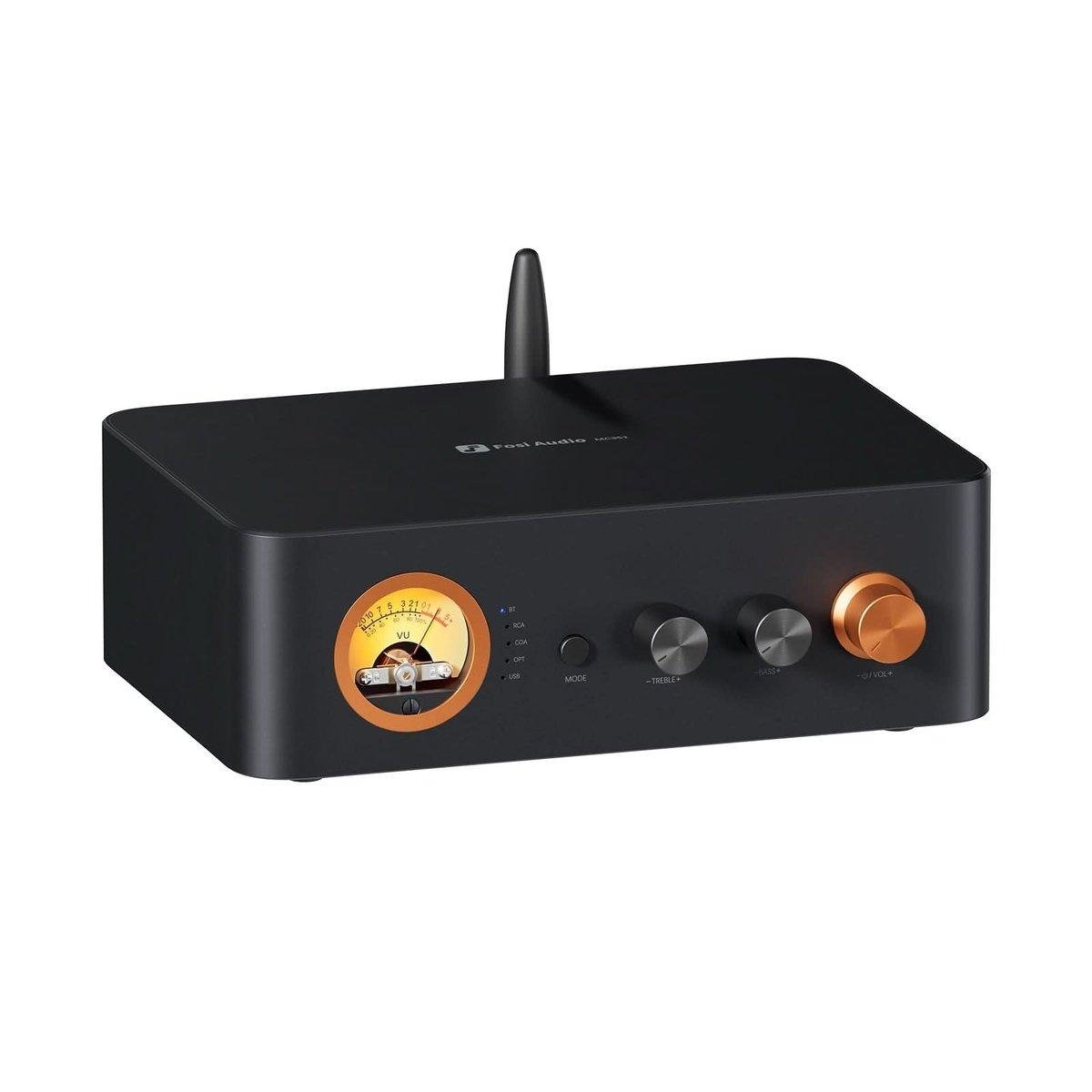
An integrated amplifier is the simplest route to good sound. It combines a preamplifier and a power amplifier in a single box, giving you source selection, volume control and speaker power in one unit. For many listeners, it is the only amplifier they will ever need, and it is the natural centre of a straightforward, enjoyable hi-fi system.
What an Integrated Amplifier Does
An integrated amplifier does two jobs. The preamplifier stage lets you choose between sources, a streaming box, a disc player or a turntable, and sets the listening volume. The power amplifier stage takes that signal and gives it the strength to drive your speakers. By combining both in one chassis, an integrated amplifier removes the need for separate boxes, extra cables and the matching decisions that come with them.
This simplicity is its greatest strength. A system built around an integrated amplifier has fewer connections, fewer things to go wrong and a smaller footprint. It is easy to set up, easy to live with and easy to enjoy.
Why One Box Makes Sense
For most listeners, one box is simply more practical. A separate preamplifier and power amplifier take twice the shelf space, need an extra interconnect and cost more for the same level of performance. An integrated amplifier delivers the same essential functions in a single, coherent design, and the money saved can go towards better speakers or a better source.
The single-box approach also suits smaller rooms and shared living spaces, where a hi-fi system has to fit alongside everyday life. An integrated amplifier sits neatly on a shelf, looks at home next to a television, and is ready to play within minutes of being connected.
Inputs for a Modern System
A modern integrated amplifier needs inputs for modern sources. Analogue RCA inputs cover most equipment, while optical and coaxial digital inputs connect televisions and digital sources directly. A phono input is essential if you play vinyl, unless your turntable has its own preamplifier built in.
Many integrated amplifiers also include Bluetooth, which lets you play music from a phone or tablet without cables, and a headphone output for private listening. Some add a subwoofer output, which makes adding deep bass straightforward later on. Checking the input list against your sources before you buy avoids frustration afterwards.
5 Reasons an Integrated Amplifier Suits a First Hi-Fi
- Simplicity: one box handles source selection, volume and power.
- Value: fewer boxes and cables mean more of your budget goes to sound quality.
- Space: a single unit fits easily on a shelf or in a living room.
- Easy setup: connect your sources and speakers, and you are ready to listen.
- Room to grow: add a subwoofer or better speakers later without replacing the amplifier.
Matching an Integrated Amplifier to Your Speakers
As with any amplifier, matching matters. Check your speakers’ sensitivity and impedance, and choose an integrated amplifier with enough power for your room, plus a little headroom in reserve. Efficient speakers in a modest room need surprisingly little power, while demanding speakers in a large room ask for more.
Listening is the final test. If you can, hear the integrated amplifier with speakers similar to your own, playing music you know well. Listen for clarity, control and a tone that stays pleasant over a long session.
When to Consider Separates Instead
Separate preamplifiers and power amplifiers make sense when you want the best possible performance and are willing to pay for it in money and space. They allow each stage to be optimised independently, and they make future upgrades easier, since you can replace one part without the other. But for most listeners, in most rooms, a good integrated amplifier already delivers everything the system needs.
An Integrated Amplifier in a Shared Living Space
A hi-fi system rarely has a room to itself. More often it shares a living room with a television, bookshelves and everyday life, and an integrated amplifier suits that reality well. It is compact enough to sit on a shelf, quiet enough to leave on standby, and simple enough that anyone in the household can use it.
Because an integrated amplifier handles the television as easily as a music source, it can replace the television’s built-in speakers entirely, improving films and everyday viewing as well as music. One box, serving the whole room, is the practical heart of a shared space.
Frequently Asked Questions
What is the difference between an integrated amplifier and a receiver?
A receiver is an integrated amplifier with a radio tuner built in, and often with surround sound processing. An integrated amplifier focuses on stereo music, without the tuner or surround features.
Can an integrated amplifier drive any speakers?
Almost any passive speakers can be driven by an integrated amplifier, provided the power and impedance are a sensible match. Check both figures before buying.
Do I still need a DAC with an integrated amplifier?
Many modern integrated amplifiers include a digital-to-analogue converter already, so you can connect digital sources directly. A separate DAC is an optional upgrade, not a necessity.
See also: The Intersection of Technology and Mental Health
Final Thoughts
An integrated amplifier is the heart of a simple hi-fi system because it does everything that matters in one box: it selects your sources, sets your volume and powers your speakers. It is practical, good value and easy to live with, and it leaves you free to enjoy the music rather than manage the equipment. For a first system, or for anyone who values simplicity, it is hard to beat, and it will serve faithfully for years to come. It also makes the system welcoming for guests, who can simply press play and enjoy the music.