Pillow Plate Laser Welding Machine vs Traditional Welding Methods
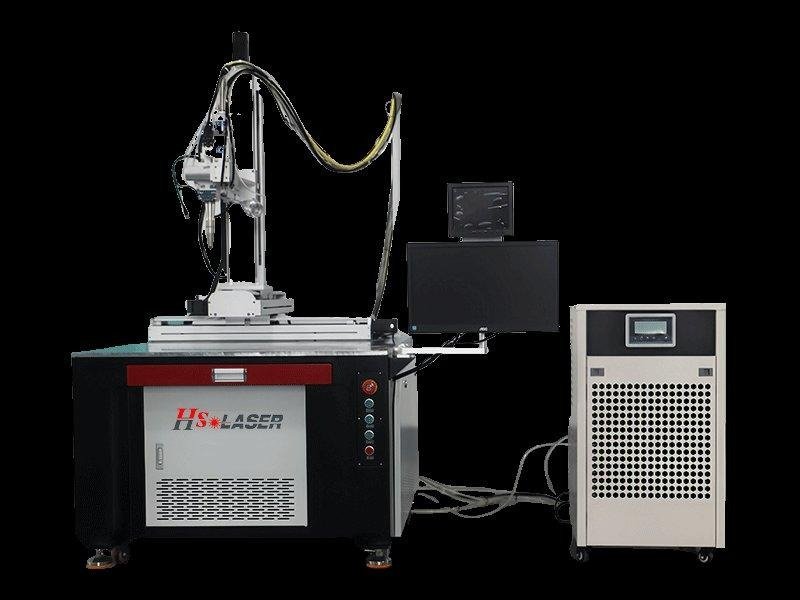
Pillow plates have been made for decades, but the way they are welded has changed. Older methods, including resistance welding and manual arc welding, still exist, yet more manufacturers are moving to laser welding for this work. A pillow plate laser welding machine offers advantages in speed, quality and distortion control that the older methods struggle to match. This article compares the main approaches so you can judge which suits your production.
Resistance Welding: The Established Method
Resistance welding joins the two sheets by passing an electric current through them at the weld point, using pressure and heat to fuse the metal. It is a well-understood process, and the equipment is relatively simple and inexpensive. For small production runs and simple patterns, it can still be a reasonable choice.
The limitations appear with larger plates and more complex patterns. Resistance welding is slower than laser welding, since each weld point must be formed individually, and the heat spreads further into the sheets, which can cause distortion. The electrodes also wear over time, and as they wear, weld quality changes, so the process needs regular monitoring and electrode maintenance.
Manual Arc Welding: Flexible but Slow
Manual arc welding gives the operator complete freedom to follow any pattern, and it needs little more than a welding torch and a power supply. For one-off plates or repairs, that flexibility is useful. The quality, however, depends entirely on the skill of the welder, and even an experienced operator cannot match the consistency of an automated system over a long production run.
The heat input from arc welding is high, which distorts thin sheets and can leave a rough weld surface that needs cleaning. The process is also slow: a pillow plate with many metres of weld takes a long time to complete by hand, and the labour cost adds up quickly.
Laser Welding: Speed and Precision
A pillow plate laser welding machine changes the equation. The laser beam moves quickly along the weld pattern, guided by a computer-controlled motion system, and it concentrates energy into a narrow zone. The result is a fast, consistent weld with minimal heat spread and almost no distortion to the sheets.
The consistency is a major advantage. Every weld is made with the same power, speed and beam position, so the quality does not vary from plate to plate or from operator to operator. That consistency also simplifies inspection: when the process is stable, pressure testing becomes a confirmation rather than a search for defects.
Comparing Speed and Throughput
Speed is where the difference is most visible. A laser system can complete a pillow plate in a fraction of the time needed by resistance or manual welding, and it can run for long shifts with little operator intervention. For manufacturers producing plates in volume, that throughput difference decides the economics of the whole operation.
The speed advantage grows with pattern complexity. A plate with a detailed weld layout takes much longer by manual methods, while a pillow plate laser welding machine follows the same pattern at the same speed regardless of its shape. That makes a pillow plate laser welding machine particularly attractive for custom plates and varied product ranges.
Comparing Quality and Distortion
Distortion is the biggest quality issue in pillow plate production. The sheets must stay flat for the inflation step, and any warping causes problems. A pillow plate laser welding machine introduces the least heat of the three methods, so it produces the flattest plates. Resistance welding causes moderate distortion, and manual arc welding causes the most.
Surface finish also favours laser welding. The welds are narrow and smooth, with little or no spatter, so the plates need minimal cleaning before use. Manual welds often need grinding and finishing, which adds time and cost to every plate.
5 Factors to Weigh When Choosing a Method
- Production volume: laser welding wins clearly at higher volumes.
- Pattern complexity: complex layouts favour computer-controlled laser welding.
- Distortion tolerance: thin sheets and tight flatness requirements favour laser.
- Available skills: laser systems need less manual welding skill from operators.
- Investment: laser equipment costs more upfront but pays back through speed and quality.
Cost Over the Life of the Equipment
A pillow plate laser welding machine costs more to buy than resistance or manual welding equipment. That upfront cost is real, and it should not be ignored. Over the life of the machine, however, the picture changes. Higher throughput means more plates per shift, lower labour costs per plate, and less rework from distortion and inconsistent welds.
For a manufacturer producing plates regularly, the payback period is often short. For occasional, one-off work, the older methods may still make sense. The right choice depends on your volumes, your quality requirements and how much you value consistency.
Maintaining a Pillow Plate Laser Welding Machine
Routine care keeps a pillow plate laser welding machine working at its best. The optics should be kept clean, the motion system checked regularly, and the cooling system inspected on schedule. A well-maintained machine holds its accuracy for years and produces the same consistent welds on every plate.
See also: The Integrated Amplifier: The Heart of a Simple Hi-Fi System
Frequently Asked Questions
Can laser welding handle all pillow plate sizes?
Yes, within the working area of the machine. Most systems cover a useful range of panel sizes, and larger machines are available for bigger plates.
Is laser welding harder to learn than manual welding?
No, it is different rather than harder. Operators learn the software and the setup process, and the machine handles the welding itself, so results depend less on individual manual skill.
Do I need to replace my existing equipment?
Not necessarily. Many manufacturers run laser welding alongside older methods, using the laser for high-volume and precision work and keeping other equipment for repairs and one-offs.
Final Thoughts
A pillow plate laser welding machine outperforms traditional methods on speed, consistency and distortion control, which are the qualities that matter most in pillow plate production. Resistance and manual welding still have a place for small runs and repairs, but for manufacturers who produce plates regularly and care about quality, laser welding is the stronger choice. The higher upfront investment is repaid through faster production, less rework and plates that meet specification every time.